As transperineal prostate biopsy becomes the new standard of care across the UK and internationally, urology departments face a second decision: Fixed-Angle vs Freehand Transperineal Biopsy: Which is More Accurate?
Both approaches share the same core advantage of avoiding the rectum and eliminating sepsis risk. However, they differ significantly in how the needle is guided, how reproducible the results are, and how quickly a clinical team can adopt them.
For urologists, procurement heads, and department leads evaluating their transperineal pathway, understanding the difference between fixed-angle and freehand techniques is critical to achieving consistent, high-quality diagnostic outcomes.
On this Page
What is Freehand Transperineal Biopsy?
Freehand transperineal biopsy involves the urologist manually inserting the biopsy needle through the perineum without a mechanical guide or grid to restrict the angle of entry. The clinician uses real-time ultrasound imaging to direct the needle by hand toward the target zone of the prostate.
This approach offers flexibility and requires no additional guiding hardware beyond the ultrasound probe. However, it places significant demands on the operator’s skill and spatial awareness, as the needle trajectory is entirely dependent on individual technique.
Key characteristics of freehand transperineal biopsy:
- Needle direction is controlled manually by the urologist
- No mechanical guide restricts or standardises the angle of insertion
- Relies heavily on operator experience and hand-eye coordination
- Sampling consistency can vary between clinicians
- Longer learning curve for less experienced operators
What is Fixed-Angle Transperineal Biopsy?
Fixed-angle transperineal biopsy uses a precision-engineered needle guide, such as Surefire or Innofine Needle Guide, that attaches to the ultrasound probe and locks the needle entry at a predetermined, consistent angle. The biopsy needle travels through the guide at a fixed trajectory, allowing the urologist to systematically sample all regions of the prostate with reproducible accuracy.
This mechanical constraint is not a limitation; it is a clinical advantage. By removing the variable of hand angle, fixed-angle systems standardise sampling across operators, procedures, and centres.
Key characteristics of fixed-angle transperineal biopsy:
- The needle entry angle is mechanically fixed and consistent
- Attaches directly to the ultrasound probe
- Enables systematic, grid-based sampling of all prostate zones
- Reproducible results regardless of operator experience level
- Shorter learning curve for training and adoption
Clinical Accuracy: Fixed-Angle vs Freehand Transperineal Biopsy
A key concern for every urology department is determining which technique is more effective at identifying clinically significant prostate cancer.
| Clinical Parameter | Freehand | Fixed Angle |
|---|---|---|
| Anterior Zone access | Variable | Consistent |
| Systematic sampling | Operator dependent | Standardised |
| Cancer detection rate | Lower in less experienced | High and reproducible |
| Operator variability | High | Minimal |
| MRI fusion compatibility | Limited | High |
| Learning curve | Steep | Shorter |
| Repeat biopsy reproducibility | inconsistent | Consistent |
Fixed-angle systems provide a significant advantage in anterior prostate sampling. The anterior zone is one of the most commonly missed areas in any biopsy approach, and it is where a meaningful proportion of clinically significant cancers reside. Because the fixed-angle guide allows systematic grid-based targeting, it ensures this region is sampled reliably in every procedure.
In freehand technique, anterior access depends on the operator’s ability to manually angle the needle through a narrow perineal entry point, a skill that takes considerable time to develop and is difficult to standardise across a department.
Workflow and Training Considerations
For department leads overseeing multiple urologists with varying levels of transperineal experience, standardisation of technique is as important as the technique itself.
- Freehand approach: A consultant urologist with years of transperineal experience may achieve excellent results. However, training a registrar or a surgeon new to transperineal biopsy in the freehand technique takes significantly longer, and their early results may not match the department standard.
- Fixed-angle approach: Because the mechanical guide enforces the trajectory, trainees achieve consistent sampling patterns much earlier in their learning curve. This makes fixed-angle systems significantly easier to implement at a departmental level and to scale across multiple operators.
For NHS trusts and private hospital groups transitioning their entire urology department to transperineal biopsy, fixed-angle systems reduce the risk of inconsistent outcomes during the transition period.
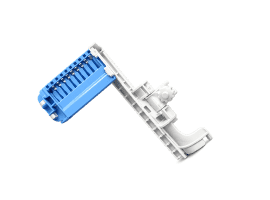
Best Freehand Biopsy Needle Guide!
40+ Urologists recommending.
Fixed-Angle Needle Guide by Global Prostate Solutions
At Global Prostate Solutions, the Needle Guides are engineered specifically for fixed-angle transperineal biopsy. Both devices attach to the ultrasound probe and lock the needle at a precise angle, enabling:
- 360-degree prostate coverage, including the anterior and apical zones
- Systematic, reproducible sampling in every procedure
- Compatibility with our Stepper Stabiliser for enhanced stability during sampling
- Seamless integration with MRI-fusion guided targeting
- Next-day delivery across the UK and Europe
The fixed-angle Needle Guide removes variability from the equation. Whether a procedure is performed by a consultant urologist, the guide ensures the needle follows the same precise trajectory every time. Consult the best urologist in Manchester for queries related to urology.
Conclusion
Both fixed-angle and freehand transperineal biopsy eliminate the core risk of the transrectal approach, rectal bacterial contamination, and post-biopsy sepsis. However, when it comes to diagnostic accuracy, departmental consistency, and ease of training, fixed-angle systems hold a clear clinical and operational advantage.
For urology departments committed to delivering the highest standard of prostate cancer diagnostics across consultants, trainees, and high-volume procedures, the GPS Fixed-Angle Needle Guide provides the mechanical precision and reliability that freehand technique simply cannot guarantee.
FAQs
1. Is fixed-angle or freehand transperineal biopsy more accurate?
Both techniques can provide accurate prostate sampling, with results depending on operator skill, targeting, and imaging guidance.
2. What is a fixed-angle transperineal biopsy?
It uses a stabilised needle guide to maintain a consistent needle angle and trajectory during biopsy.
3. What is freehand transperineal biopsy?
Freehand biopsy allows the clinician to manually guide the needle without a fixed needle guide, offering greater flexibility.
4. Which technique is easier to perform?
Fixed-angle systems can provide greater stability, while experienced clinicians may prefer freehand techniques for their flexibility.
5. Can freehand biopsy detect clinically significant prostate cancer?
Yes. When performed correctly, freehand transperineal biopsy can effectively detect clinically significant prostate cancer.