If your doctor has recommended a prostate biopsy, you may wonder what kind of needle is used for a prostate biopsy. A modern transperineal prostate biopsy uses three specialised instruments: a spinal needle for local anaesthesia, a coaxial needle to create an access pathway, and a prostate biopsy gun to collect tissue samples.
In this article, we’ll explain the needle for prostate biopsy, the role of each instrument, and how they work together during the procedure.
On this Page
Needle for Prostate Biopsy
A needle for prostate biopsy refers to the specialised needles and instruments used during a prostate biopsy procedure. Rather than relying on a single needle, the procedure uses different devices at different stages to improve patient comfort, provide accurate access to the prostate, and obtain high-quality tissue samples for laboratory examination.
In a standard transperineal biopsy, the procedure typically involves three key instruments:
- Spinal needle – used to administer local anaesthesia.
- Coaxial needle – creates a stable pathway to the prostate.
- Prostate biopsy gun – fitted with a spring-loaded biopsy needle to collect tissue samples.
Spinal Needle for Local Anaesthesia
The first needle for prostate biopsy is the spinal needle, which is used to administer local anaesthesia around the prostate before tissue sampling begins. By numbing the treatment area, it helps reduce discomfort during the procedure and improves the overall patient experience.
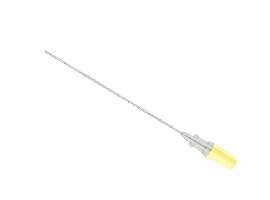
Spinal Needle for Local Anaesthesia.
The spinal needle is designed to deliver the anaesthetic with precision and is not used to collect tissue samples.
Commonly used specifications include: 20G × 20 cm
Once the anaesthetic has taken effect, the biopsy procedure can begin.
Coaxial Needle for Tissue Access
After the area is numbed, a coaxial needle is inserted through the perineum to create a stable pathway to the prostate. Instead of making multiple punctures through the skin, the prostate biopsy gun is introduced through the coaxial needle to obtain tissue samples from different areas of the prostate.
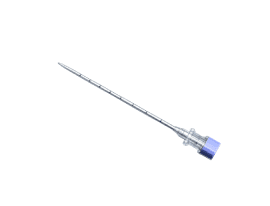
Premium Prostate Coaxial Needle!
This approach allows the clinician to collect multiple samples while maintaining a consistent access route throughout the procedure.
Typical specifications include:
- 15G × 7 cm
- Stainless steel construction
- Sterile, single-use
Using a coaxial needle can improve procedural efficiency, support accurate needle placement, and minimise repeated tissue punctures.
Prostate Biopsy Gun for Tissue Sampling
The prostate biopsy gun is the primary instrument used to collect tissue samples from the prostate. It contains a sterile, spring-loaded biopsy needle that rapidly advances and retracts to remove a small core of tissue for pathological examination.
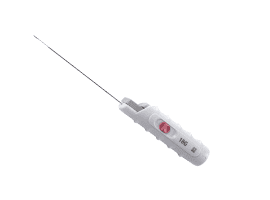
Best Prostate Biopsy Gun in UK!
The spring-loaded mechanism enables quick and consistent tissue sampling while helping the urologist accurately target different regions of the prostate.
Key features include:
- Spring-loaded firing mechanism for precise tissue sampling
- Sterile biopsy needle integrated with the biopsy gun
- Single-use tissue sampling component
- Compatible with transperineal prostate biopsy procedures
Depending on the patient’s MRI findings and clinical assessment, the urologist may collect multiple tissue samples from different areas of the prostate. These samples are then placed in labelled specimen containers and sent to a pathology laboratory, where they are examined for prostate cancer or other abnormalities.
Know more about Prostate Cancer.
How These Instruments Work Together
During a transperineal prostate biopsy:
- A spinal needle is used to administer local anaesthesia.
- A coaxial needle creates a stable access pathway to the prostate.
- The prostate biopsy gun is advanced through the coaxial needle to collect tissue samples.
- The collected tissue samples are sent to a laboratory for microscopic examination.
Each instrument has a specific role in the procedure. The spinal needle helps improve patient comfort, the coaxial needle provides a reliable access channel, and the prostate biopsy gun enables precise tissue collection.
Conclusion
There is no single needle for prostate biopsy. Instead, a transperineal prostate biopsy involves a combination of specialised instruments, including a spinal needle, a coaxial needle, and a prostate biopsy gun for tissue sampling. Understanding how these instruments work together can help patients better understand the procedure.
Visit our page to learn more and request a Demo.
FAQs
1. What needle is used for a prostate biopsy?
A transperineal prostate biopsy typically uses a spinal needle, a coaxial needle, and a prostate biopsy gun fitted with a biopsy needle for tissue sampling.
2. What is the purpose of a spinal needle during a prostate biopsy?
The spinal needle is used to administer local anaesthesia around the prostate before the biopsy begins, helping to minimise discomfort.
3. Why is a coaxial needle used in a prostate biopsy?
It creates a stable pathway to the prostate, allowing multiple tissue samples to be collected through a single access point.
4. How does a prostate biopsy gun work?
The prostate biopsy gun uses a spring-loaded biopsy needle to quickly collect small tissue samples from the prostate for laboratory examination.
5. Are the needles used for a prostate biopsy sterile?
Yes. The spinal needle, coaxial needle, and biopsy needle used with the prostate biopsy gun are sterile, single-use instruments designed for one procedure.