Prostate enlargement medically known as Benign Prostatic Hyperplasia or BPH, is one of the most common conditions affecting men over 50. Although it is not cancer, it can cause uncomfortable urinary symptoms that impact daily life. Many men wonder what is the best treatment for prostate enlargement, and the answer depends on several factors, including symptoms, age, and overall health.
On this Page
What is Prostate Enlargement?
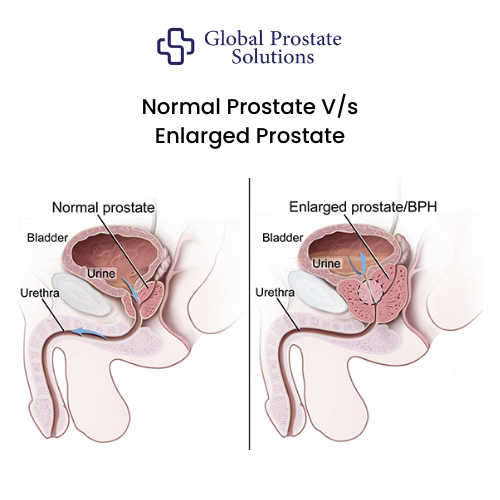
The prostate naturally grows as men age. When it becomes too large, it can squeeze the urethra which a tube that carries urine out of the body leading to urinary difficulties such as:
- Frequent urination
- Slow or weak flow
- Trouble starting or stopping
- Feeling the bladder isn’t fully empty
- Night-time urination
- Urgency
If left untreated, severe Benign Prostatic Hyperplasia can lead to bladder problems, infections, or kidney issues.
What is the best treatment for Prostate Enlargement?
There is no single “best” option for everyone. The ideal treatment depends on various factors such as:
- Symptom severity
- Prostate size
- Age and general health
- Personal preference
- Response to previous treatments
Let us now have a look into the main treatment choices used in the UK.
1. Lifestyle Changes (for Mild Symptoms)
For many men, small adjustments can greatly improve symptoms. Men with mild symptoms who want to manage BPH naturally must check these areas:
- Reducing caffeine and alcohol
- Limiting evening fluids
- Maintaining a healthy weight
- Staying physically active
- Bladder training techniques
- Avoiding decongestants that tighten prostate muscles
2. Minimally Invasive Treatments (Modern, Effective Options)
These treatments are becoming very popular in the UK because they offer strong symptom relief with faster recovery and fewer side effects.
- UroLift®
A small implant lifts the prostate tissue away from the urethra. Benefit of this treatment includes no cutting or heating, quick recovery, low risk of sexual side effects
- Rezum® Water Vapour Therapy
This treatment uses steam to shrink prostate tissue. Natural tissue reduction, Long-lasting results, Clinic-based procedures are some of the benefits.
- Prostate Artery Embolisation (PAE)
Prostate Artery Embolisation reduces blood supply to the prostate, shrinking it over time. This technique is minimally invasive and good for very large prostates
Demanding Prostate Biopsy Kit
in the United Kingdom.!!!
3. Surgical Options (Best for Severe or Long-Standing Symptoms)
If medication or minimally invasive procedures are not effective, surgery may be the best treatment for prostate enlargement.
- Transurethral Resection of the Prostate (TURP)
The most common surgery. Removes part of the prostate through the urethra.
- Holmium Laser Enucleation (HoLEP)
A laser removes excess prostate tissue. This option works well for large prostates.
- Open or Robotic Surgery
Used for extremely enlarged prostates.
How to choose the right treatment?
Your urologist will recommend the best option based on:
- Your symptoms
- Prostate size on ultrasound
- PSA level
- Urine flow tests
- Overall health
- Personal preference
Most men start with medication, and only move to procedures if symptoms persist.
Can an enlarged prostate be cured?
BPH cannot always be cured, but symptoms can be effectively managed. Modern treatments offer long-term relief and improved quality of life.
Conclusion
Understanding what is the best treatment for prostate enlargement is the first step to taking control of your health. With options ranging from lifestyle changes and medication to minimally invasive treatments and surgery, most men find effective relief. The right choice depends on your symptoms and personal goals, and a urologist can help you decide what works best for you.
FAQs
1. What’s the fastest way to shrink an enlarged prostate?
There is no instant way to shrink the prostate, but medications such as 5-alpha-reductase inhibitors (like finasteride or dutasteride) can shrink the gland over a few months. Invasive treatments such as Rezum® or UroLift® can also improve symptoms quickly. Lifestyle changes such as reducing caffeine, alcohol, and evening fluids can help ease symptoms but won’t shrink the prostate itself.
2. What is the most successful treatment for an enlarged prostate?
The best treatment depends on the size of the prostate and symptom severity. Many men benefit from a combination of medications. For long-lasting relief, procedures such as UroLift®, Rezum®, HoLEP, or TURP are highly effective.
3. Can prostatitis cause diarrhoea?
Yes, prostatitis can sometimes cause diarrhoea. The prostate sits close to the rectum, and inflammation or infection can irritate nearby tissues, affecting bowel movements. Diarrhoea can also be caused by many other conditions, so it’s important to get checked if symptoms persist.
4. What is the new NHS treatment for enlarged prostate?
The NHS has recently introduced modern, minimally invasive treatments such as Rezum® water vapour therapy and UroLift®, which offer quicker recovery, fewer side effects, and no major surgery. Some centres also provide Prostate Artery Embolisation as an alternative option.
5. What do urologists recommend for an enlarged prostate?
Urologists usually start with lifestyle changes and medications. If symptoms do not improve, they may recommend minimally invasive procedures like Rezum® or UroLift®, which preserve sexual function and offer fast recovery. For very large prostates or severe symptoms, surgeries such as HoLEP or TURP may be advised.
6. Can an enlarged prostate go back to normal size?
An enlarged prostate rarely returns to its original size on its own. However, medications can shrink it, and minimally invasive or surgical treatments can remove or reduce excess tissue. Even if the prostate doesn’t return to its original size, treatment can significantly improve symptoms and quality of life.