
Urosepsis is a severe and potentially life-threatening infection that starts in the urinary tract and spreads into the bloodstream. Because symptoms can quickly progress, early detection and treatment are critical. Understand what urosepsis is, how it develops, and ways to prevent it can help protect your health and improve outcomes.
On this Page
What is Urosepsis?
Urosepsis is a serious bloodstream infection caused by a urinary tract infection (UTI) that spreads beyond the urinary system. It can lead to widespread inflammation, organ dysfunction, and septic shock if left untreated. Urosepsis is considered a medical emergency.
What is a Urinary Tract Infection?
A urinary tract infection (UTI) is an infection caused by bacteria entering the urinary system, including the urethra, bladder, ureters, or kidneys. Some of the common symptoms include:
- Burning sensation while urinating
- Frequent urge to urinate
- Cloudy or foul-smelling urine
- Pelvic pain
If untreated, a UTI can travel to the kidneys and bloodstream, causing urosepsis.
How common is urosepsis?
Urosepsis is one of the most common forms of sepsis, especially in older adults. Around 20–30% of sepsis cases originate from urinary tract infections, making it a major public health concern. Individuals with weakened immune systems, diabetes, kidney problems, or long-term catheters are at higher risk.
What are the symptoms of urosepsis?
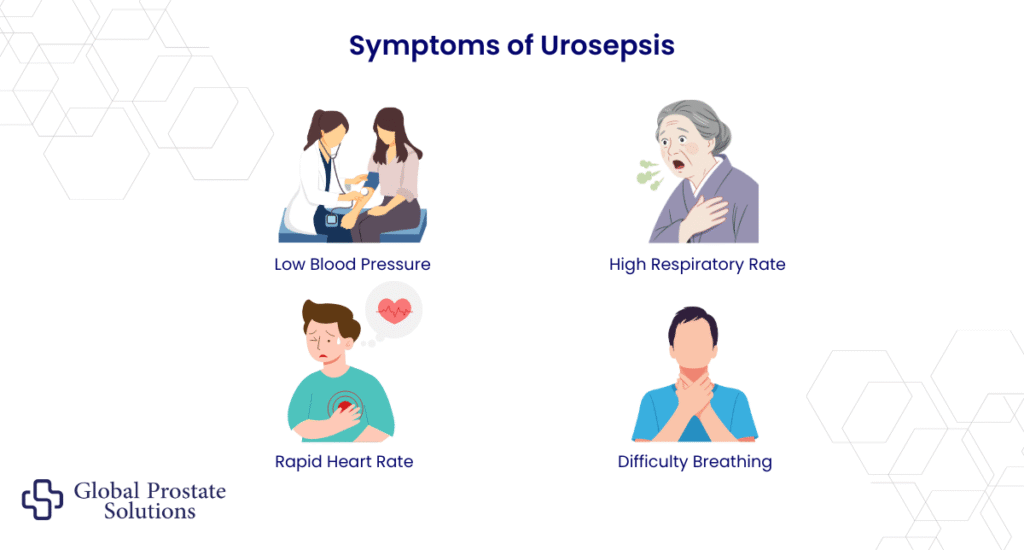
Symptoms of urosepsis are often more severe than typical UTI symptoms and may include:
- High fever or low body temperature
- Chills
- Rapid heart rate
- Rapid breathing
- Low blood pressure
- Confusion or disorientation
- Severe pain in the lower abdomen or back
- Decreased urine output
If any of these symptoms appear suddenly, urgent medical attention is required.
What causes urosepsis?
Urosepsis occurs when bacteria from a urinary tract infection enter the bloodstream. Common causes include:
- Untreated or recurring UTIs
- Kidney infections
- Urinary blockages (stones, enlarged prostate)
- Catheters
- Weakened immune system
- Diabetes
- Recent urinary procedures
- Escherichia coli (E. coli) is the most frequent bacterial cause.
What are the three stages of urosepsis?
Urosepsis progresses in three major stages:
- Sepsis: The body reacts strongly to infection, causing inflammation, fever, and elevated heart rate.
- Severe Sepsis: The infection begins affecting organs, leading to confusion, reduced urine output, and difficulty breathing.
- Septic Shock: Blood pressure drops dangerously low, risking organ failure. This stage is life-threatening.
What are the complications of urosepsis?
If not treated promptly, urosepsis can lead to:
- Kidney failure
- Liver or lung failure
- Tissue damage
- Septic shock
- Multiple organ failure
- Increased mortality
- Immediate treatment significantly reduces complications.
How is urosepsis diagnosed?
The diagnosis typically includes:
- Physical examination
- Blood tests
- Urine analysis and culture
- Imaging tests (ultrasound, CT scan)
- Kidney function tests
- Timely diagnosis is crucial to prevent progression.

Demanding Prostate Biopsy Kit
in the United Kingdom.!!!
How is urosepsis treated?
Treatment must begin as soon as urosepsis is suspected and may include:
- IV antibiotics (first-line treatment)
- IV fluids to stabilise blood pressure
- Medications to support organ function
- Drainage of infection (if needed)
- Oxygen therapy
- ICU care for severe cases
- Early treatment greatly improves survival.
What is the survival rate for urosepsis?
The survival rate depends on how quickly treatment begins.
- Early-stage urosepsis: High survival rate (70–90%)
- Severe urosepsis or septic shock: Lower survival rate (around 50% or less)
How can I prevent urosepsis?
You can reduce the risk of urosepsis by:
- Treating UTIs promptly
- Staying hydrated
- Maintaining good hygiene
- Managing chronic health conditions
- Avoiding unnecessary catheter use
- Regular medical checkups
- Recognising symptoms early
Conclusion
Urosepsis is a dangerous complication of UTIs that requires fast medical intervention. Knowing what is urosepsis, recognising symptoms, and seeking early treatment can save lives. With proper hygiene, timely care, and regular monitoring, this can often be prevented.
Finding difficulty in getting a consultation? Find the one of the best physician in Manchester and get diagnosed.
FAQs
1. What are the signs and symptoms of urosepsis?
Common symptoms include fever, chills, rapid heartbeat, low blood pressure, confusion, and severe urinary discomfort.
2. What are the three stages of urosepsis?
The three stages are sepsis, severe sepsis, and septic shock.
3. What is the survival rate of urosepsis?
Survival rates are high if treated early, but severe cases like septic shock have a survival rate of about 50% or less.
4. Is there a cure for urosepsis?
Yes. Urosepsis can be cured with timely treatment, including antibiotics, fluids, and supportive medical care.