The term Prostate cancer can bring worry, but understanding it doesn’t have to. A proper awareness and early detection are crucial to overcome this. But Don’t worry. We got it for you. This comprehensive blog guide breaks down What is Prostate Cancer, its potential signs, and the crucial steps for early detection and effective management right here in our city.
On this Page
What is Prostate Cancer?
Prostate cancer is a condition in which cancerous cells develop in the prostate gland—a small, walnut-sized organ that helps produce the fluid found in semen. Although it is one of the most common cancers affecting men, many cases are identified at an early stage through routine screening and evaluation of symptoms.
When diagnosed early, prostate cancer is often highly treatable, giving patients a better chance of successful treatment and long-term recovery. The prostate gland produces fluid that nourishes and transports sperm. While some prostate cancers grow slowly and may not cause significant harm, others can be aggressive and spread quickly to other parts of the body (metastasis).
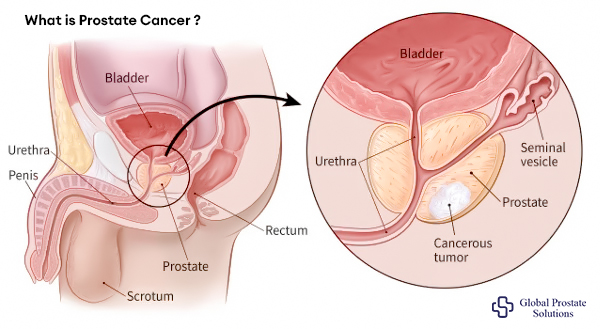
Popular testing techniques like advanced biopsy kits are used to identify the issues and cure at the early stages.
What are the types of Prostate Cancer?
Most prostate cancers are classified as adenocarcinomas, which develop in the glandular cells of the prostate responsible for producing the fluid that forms part of semen. This is by far the most common type of prostate cancer diagnosed in men.
Although uncommon, prostate cancer can also arise from other types of cells. These rare forms include:
- Small cell carcinoma
- Transitional cell carcinoma (urothelial carcinoma)
- Neuroendocrine tumors
- Sarcomas
Each type behaves differently and may require a specific treatment approach, making an accurate diagnosis essential for effective care.
How to identify the Prostate Cancer symptoms?
At the early Stages of Prostate Cancer, no noticeable symptoms will be present. This underscores the importance of regular screening, especially for men in higher-risk categories (age 50 and over, family history of prostate cancer, African ancestry). As prostate cancer progresses, some men may experience the following symptoms:
- Frequent urination, especially at night
- Difficulty starting or stopping urination
- Weak or interrupted urine flow
- Painful or burning urination
- Urine or semen with blood content
- Erectile dysfunction
- Hips, back, or bones pain (in advanced stages)
It’s important to note that these symptoms can also be caused by other, less serious conditions like benign prostatic hyperplasia (BPH) or prostatitis. However, if you experience any of these, it’s crucial to consult a urologist for proper evaluation.

Get an advanced
Stepper Stabiliser for Free.!!!
What is the diagnosis method for Prostate Cancer?
If prostate cancer is suspected based on symptoms or screening results (elevated PSA level or abnormal DRE), several diagnostic methods are employed:
- Prostate Specific Antigen (PSA Test): A blood test that measures the level of PSA, a protein produced by the prostate gland. Check what PSA test is.
- Digital Rectal Exam (DRE): A physical examination where the doctor inserts a lubricated gloved finger into the rectum to identify the prostate gland for any abnormalities.
What are the treatment options for Prostate Cancer?
Prostate Cancer treatment depends on various factors, including the stage and grade of the cancer, patient’s age, his overall health, and preferences. Leading Medical centers and hospitals focused on urology offer a comprehensive range of treatment options:
- Active Surveillance: For slow-growing, low-risk cancers, careful monitoring with regular PSA tests, DREs, and sometimes repeat biopsies may be recommended instead of immediate treatment.
- Radical Prostatectomy: Surgical removal of the entire prostate gland and surrounding tissues. This can be performed through open surgery, laparoscopically, or robotically (Robot-Assisted Laparoscopic Prostatectomy), which is increasingly available and offers benefits like smaller incisions, less blood loss, and faster recovery.
- Radiation Therapy: Using high-energy beams to kill cancer cells. Options include:
- External Beam Radiation Therapy (EBRT): Radiation Therapy delivered from a machine outside the body.
- Brachytherapy (Internal Radiation Therapy): Radioactive seeds are implanted directly into the prostate gland.
- Hormone Therapy (Androgen Deprivation Therapy – ADT): Reduces the levels of male hormones (androgens) that fuel prostate cancer growth. Often used for advanced cancer with radiation therapy.
- Chemotherapy: Uses drugs to kill cancer cells. Mainly considered for advanced prostate cancer stage.
- Targeted Therapy: Drugs for targeting specific proteins involved in cancer cell growth.
- Immunotherapy: Improves the body’s immune system to fight against cancer cells.
Conclusion
In conclusion, What is Prostate Cancer is explained along with all the important areas to focus. Early detection and access to advanced diagnostic and treatment options are crucial in managing prostate cancer effectively.
Numerous experienced urologists and state-of-the-art medical facilities offering comprehensive prostate care, including innovative techniques like transperineal prostate biopsy and MRI fusion.
For any concerns about Prostate Health, don’t hesitate to seek professional medical advice.
FAQs
1. What are the early warning signs of prostate cancer?
In its early stages, prostate cancer often doesn’t cause any noticeable symptoms. This is why regular screening, especially for men over 50 or with risk factors, is so important for early detection.
2. What is a PSA test, and what does an elevated level mean?
The PSA test is a blood test that measures a protein produced by the prostate gland. Elevated PSA levels can indicate prostate cancer, but they can also be caused by other conditions like BPH or prostatitis. Further investigation, such as a biopsy, is usually needed to determine the cause.
3. What are the different types of prostate biopsy available?
Various prostate biopsy techniques are available, including the traditional Transrectal Ultrasound (TRUS) guided biopsy and more advanced methods like Transperineal Prostate Biopsy (which offers a lower risk of infection) and MRI Fusion Biopsy (for highly targeted sampling of suspicious areas identified on MRI).
4. What are the main treatment options for prostate cancer?
Leading urology centers offer a range of treatment options tailored to the individual’s situation. These include active surveillance, surgery, various forms of radiation therapy, hormone therapy, chemotherapy, targeted therapy, and immunotherapy. The best option depends on the cancer’s stage and grade, the patient’s health, and their preferences.
5. How to avoid prostate cancer?
Considering some facts might help avoiding Prostate Cancer up to an extent:
• Eat healthy: Lots of fruits, vegetables, and whole grains. Limit red and processed meat.
• Maintain a healthy weight.
• Exercise regularly.
• Talk to your doctor.
6. What causes prostate cancer?
Some things increase the risk of prostate cancer are Older age, Family history, Race/Ethnicity, Obesity, diet etc.
7. What are the top 10 signs of prostate cancer?
While the first 5 listed are common, here are 10 potential signs (some are more likely in later stages):
• Frequent urination.
• Difficulty starting or stopping urination.
• Weak or interrupted urine flow.
• Pain or burning during urination.
• Blood in urine or semen.
• Pain in the back, hips, or pelvis.
• Erectile dysfunction.
• Unexplained weight loss.
• Fatigue.
• Bone pain or fractures.